Morgan Stanley Forecasts Robotics to Drive 36% of Starlink Revenue by 2040
Morgan Stanley projects robotics customers will comprise up to 36% of Starlink revenue by 2040, highlighting the integration potential of satellite connectivity with autonomous technologies.
Robotics news
Part 1 of 5
Table of Contents
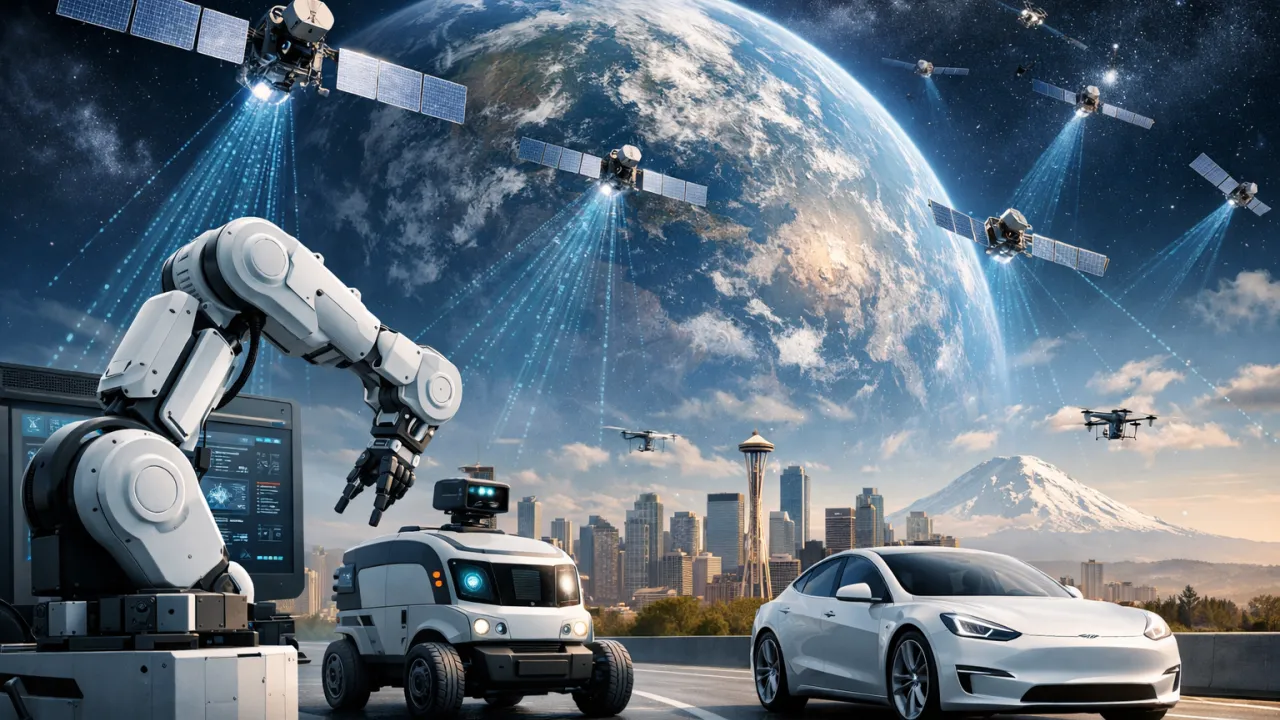
A Morgan Stanley research report authored by analyst Adam Jonas and colleagues projects significant growth in the share of SpaceX’s Starlink satellite network revenue derived from robotics customers. The report estimates robotics will account for 11% of Starlink revenue by 2030, increasing to 29% in 2035, and reaching 36% by 2040. Autonomous vehicle-related revenue within this category is projected to grow from $6.4 billion in 2035 to $31.2 billion in 2040.
The study introduces a concept of a robot-to-robot mesh hybrid computing architecture, where machines communicate directly and share computing workloads between onboard processors and remote resources via satellite links like Starlink. This architecture underpins the projected revenue growth, reflecting increased data traffic and integration demands.
However, these figures represent analyst projections and have not been confirmed by SpaceX, Tesla, or Morgan Stanley. No official announcements verify the deployment of such integrated systems or confirm that Tesla’s autonomous taxi, the Cybercab, presently uses Starlink terminals, although some reports suggest this as an expectation.
The report emphasizes that the growth projections depend on various assumptions, including fleet sizes, pricing, regulatory approvals, and technological adoption rates, all of which carry uncertainty. The integration of satellite connectivity in robotics and autonomous vehicles presents design challenges, including hardware, power, and thermal considerations.
This analysis offers a framework for understanding potential synergy between SpaceX’s satellite network and Tesla’s autonomous and robotic initiatives but should be treated as a scenario rather than a confirmed outcome.
Original article published by shattered.io.